
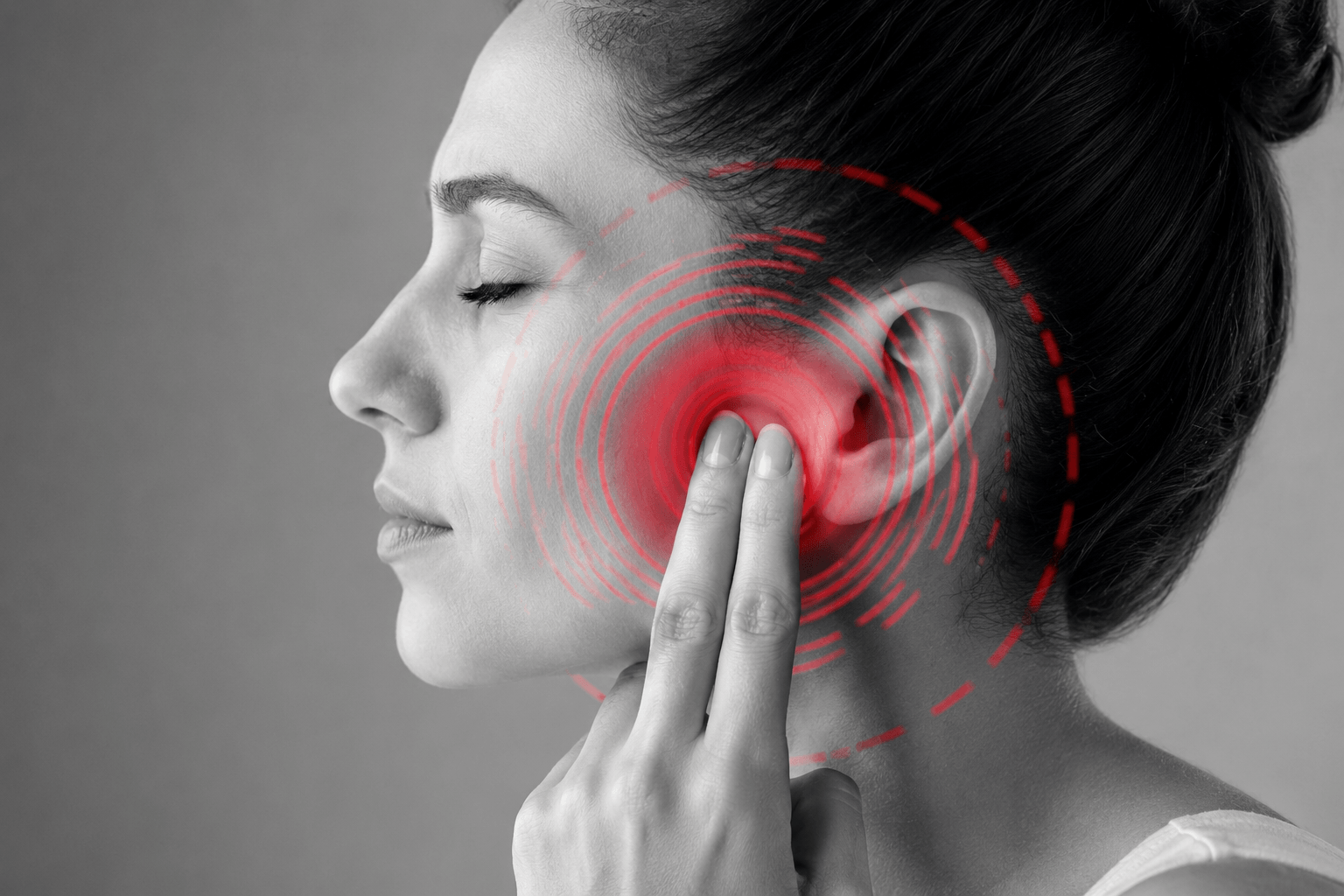
TMJ & Headache
Temporomandibular disorder (TMD), is a term that describes an entire group of disorders involving the temporomandibular joint or joints (TMJ).
The TMJs are the jaw joints. There is one on each side of your head just in front of your ear canals. Like many other joints in the body, they consist of:
- Muscles that control joint movement,
- Ligaments that hold the bones together,
- Cartilage that provides a smooth surface for the bones to move on,
- A disc that helps with proper movement, of the bones,
- Elastic tissue that helps hold the disc in place.
One or more of the above tissues can cause symptoms. In fact, studies suggest that one third of the population at any one time experiences TMJ symptoms such as pain with chewing, yawning, or jaw opening. Women seem to have TMJ problems much more often than men and it is estimated that 3-6% of the population might benefit from treatment.
There are a variety of temporomandibular disorders. The muscles (myogenous), joint(s) (arthrogenous), or a combination of the two may cause pain.
Since physiotherapists treat muscle and joint problems, they are ideally suited to address a TMD. Moreover, a majority of patients diagnosed with TMD, also have associated neck pain. Both respond well to treatment provided by a physiotherapist. No other healthcare practitioner is better suited to address both the TMD and neck pain.
TMD may appear to be a complex condition and it shouldn’t be. This website and your physiotherapist can help to insure the following:
- You are properly educated
- that your treatment is conservative, cost-effective,
- goals are realistic,
- your examination is thorough and meant to identify your source(s) of pain.
When a physiotherapist performs the examination, they will be able to classify you as having one or more of the following:
- An inflammatory condition
- Limited jaw range of motion
- Excessive jaw range of motion
- Arthrogenous Disc Displacement
- Jaw muscle pain
- Neck pain causing related headaches (sometimes mistaken as TMD)
Once the involved structures are identified, the therapist will be able to provide you with the appropriate treatment.
We work in a multidisciplinary team, with a Dentist and Maxillafacial surgeon